Guides · 3 min read ·
How to Import a Chinese EV, Step by Step
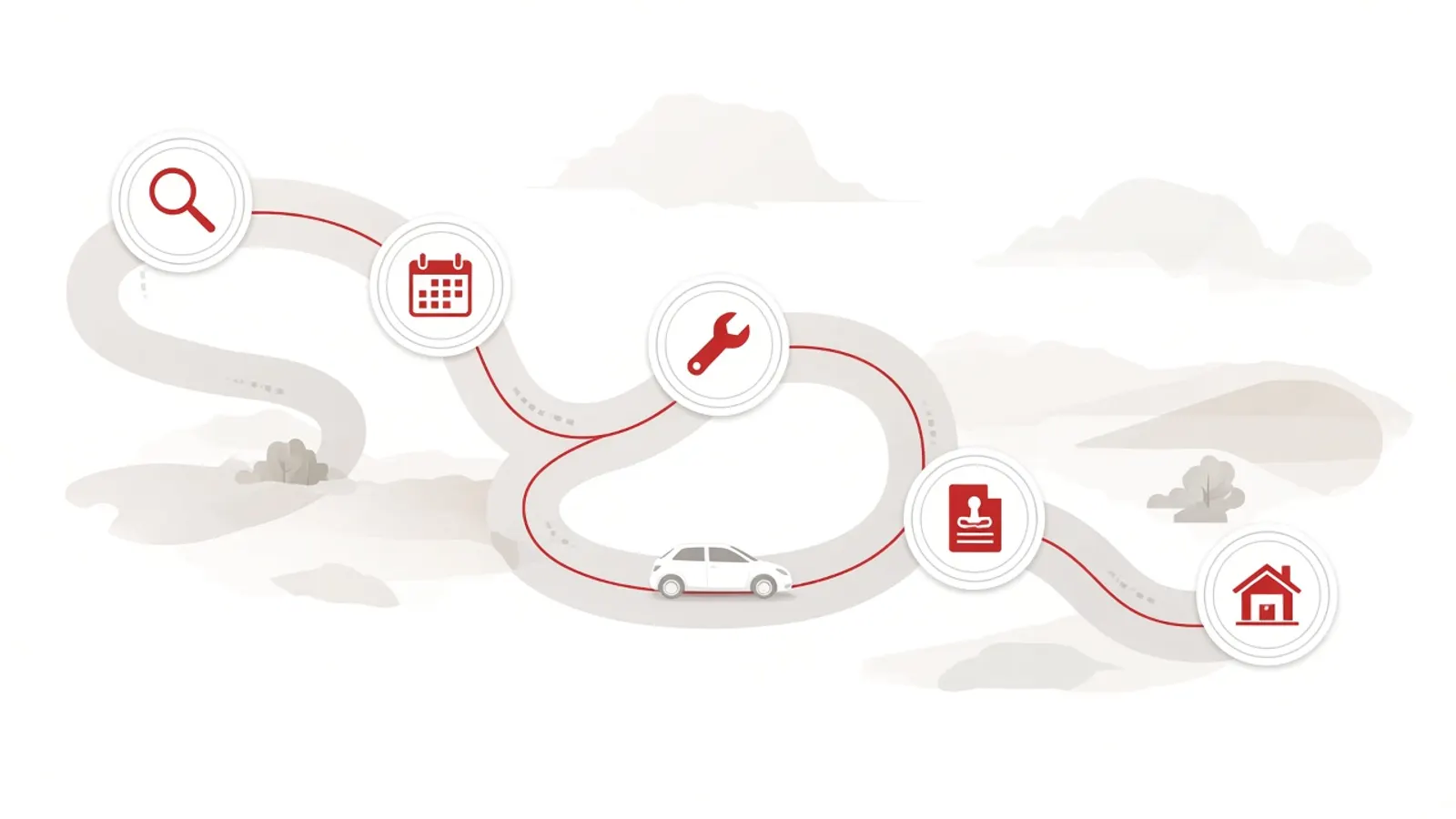
Importing a Chinese EV into the US isn't one process. It's a series of separate checks run by NHTSA, EPA, Customs and the Commerce Department. Here they are in the order that tends to decide things, with links to the rule behind each one. This is general information, not legal advice.
Step 1: Check the car's age
Start here, because it decides which path you're on. A car that is at least 25 years old can be imported without regard to whether it meets the Federal Motor Vehicle Safety Standards. NHTSA counts the 25 years from the date of manufacture, not from the model year on the badge. On the NHTSA HS-7 declaration, Box 1 is the statement that the car is 25 or more years old. Read the 25-year rule.
Most Chinese EVs are far newer than that. If yours is under 25 years old, go to step 2.
Step 2: Find out if NHTSA lists it as eligible
A car under 25 years old that wasn't built and certified to FMVSS can't come in for road use just because you want it. The path is narrow: NHTSA must first find the car eligible, then a Registered Importer brings it into the country and modifies it to comply.
- Eligibility can rest on the car being substantially similar to a US-certified model that can be readily altered, or, if there's no such model, on evidence that it can be altered to meet the standards.
- Appendix A to 49 CFR Part 593 lists the vehicles NHTSA has found eligible.
- NHTSA keeps a public list of Registered Importers.
Some of our car pages say a Registered Importer conversion isn't economically viable. That's our catalog's note, not a NHTSA cost finding.
There is one more NHTSA path, Show or Display, for cars of historical or technological interest. It needs a permission letter from NHTSA, and road use comes with a 2,500-mile-a-year limit until the car turns 25. As a general rule, NHTSA won't grant it if more than 500 of the model were built or a US-certified version was sold.
Step 3: Clear EPA separately
EPA runs its own program under the Clean Air Act, and a NHTSA exemption doesn't settle it. Importing a car that isn't covered by an EPA certificate of conformity, or by an exemption EPA recognizes, can be a prohibited act. Check EPA's own import page for the rule in force on the day of entry. FMVSS and EPA, explained.
Step 4: Work out the duty
Electric passenger cars from China under HTS subheading 8703.80.00 carry a 100% additional Section 301 duty for entries on or after 27 September 2024. The ordinary column 1 duty is separate, which is why our car pages often show 102.5%.
- The 100% figure is for that subheading. A gasoline car, a plug-in hybrid or a truck can fall under a different line with a different rate.
- Pickups and other goods vehicles often fall under heading 8704, where many lines carry the 25% chicken tax.
- Check the HTS line and the chapter 99 note in force for your entry.
Plus adds a landed cost estimator and import scoring to every car page. Premium shows the same car's price in every country it's sold in, with history. See Plus and Premium →
Step 5: Check the connected-vehicle rule
A Commerce Department rule, in effect since 17 March 2025, restricts connected-vehicle software and hardware with a sufficient link to China or Russia. For model year 2027 it restricts cars with covered software. For model year 2030, or 1 January 2029 for hardware without a model year, it restricts imports of the connectivity hardware: telematics, Bluetooth, cellular, satellite and Wi-Fi modules. It applies to vehicles under 10,001 pounds.
What this means in practice
For a new Chinese EV, the barriers stack. It usually isn't on NHTSA's eligible list, it needs EPA coverage, it carries the Section 301 duty, and from model year 2027 the connected-vehicle rule applies. Each check is separate, so clearing one doesn't settle the others.
If you're curious about one brand in particular, Can You Buy a BYD in the US? runs these checks against BYD's lineup.
Questions people ask
- Can I import a new car from China for personal use?
- Only if it clears every check: NHTSA eligibility through a Registered Importer, EPA coverage, the duty, and from model year 2027 the connected-vehicle rule. A new car is under 25 years old, so it needs the NHTSA eligibility path first.
- Does the 25-year rule cover EPA too?
- No. EPA is a separate program. Check EPA's import page for its rules.
- Is the tariff on every Chinese car 100%?
- No. The 100% additional Section 301 duty is for listed lines such as HTS 8703.80.00, electric passenger cars. Other vehicle types can have a different rate.
Go deeper with a membership
Articles and car pages stay free. These tools are for members.
- See the same car's price in every country it's sold in, with history
- See where the car was designed, sourced, and built, with a source on each claim
- Price history insights and trend framing
- Specification depth analysis and premium insights
This page is factual and informational only. It is not legal advice.